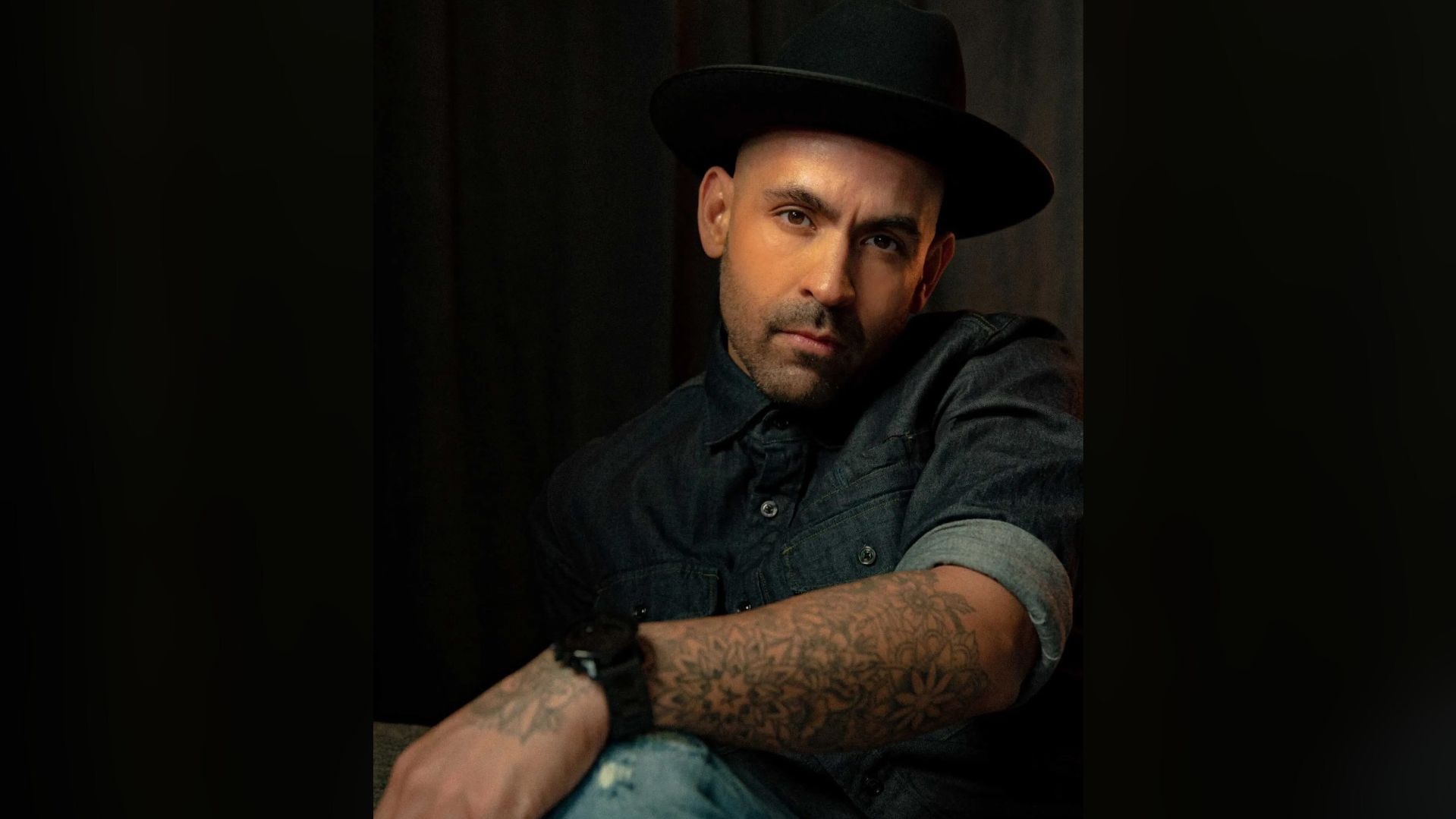
Blake Vaz is a brilliant filmmaker. His life story is fascinating and reveals the source and drive of his creativity. In this Q&A, you’ll get to meet Blake, learn about his influences, and get treated to behind-the-scenes stories from three shorts premiering this Thanksgiving on Screamify: Bloodstains, L.U.N.A., and Il Colore della Notte.
You’re an award-winning filmmaker, and you’ve just licensed three shorts to Screamify. You’re also a musician, actor, and you speak multiple languages. Can you give us a summary of how you got to where you are now in your career?
My creative career has really been a journey through different art forms that somehow all connect back to storytelling. It started in my teenage years on the border of El Paso and Juárez, where I was the frontman of a rock band singing in Spanish with a grunge-hard-rock-punk flavor. Eventually we evolved into The Mulberry Purple, blending our hard-rock roots with a bit of Mexican corrido-style storytelling. That was the first time I realized I loved telling stories, even if it was through loud guitars instead of a camera.
That love for storytelling naturally transitioned into filmmaking. I’ve always had a camera in my hand — shooting little skits, recording my bands, editing with two VHS decks. Even though I studied computer science and worked in that world right out of college, everything shifted when I moved to Los Angeles. Working at the LA Times took me from tech into content creation and video editing. Covering concerts, basketball, boxing, movie premieres — producing video as the Content Manager for the newspaper — showed me what visual storytelling really meant.
From there I moved into advertising, where I worked with big brands and eventually became Director of Branded Content at a multicultural agency. That’s where things really exploded creatively. I won an Emmy producing the music TV show Té Para Tres, produced other award-winning music web series, and eventually launched Valagardo Productions, where I’ve been directing and producing commercials, branded content, social videos, and my short films.
My roots — growing up right on the border, speaking Spanish and English at the same time — have always shaped everything I do, sometimes even subconsciously. That bicultural, bilingual background gave me a way of seeing the world that makes its way into my work, whether I plan it or not. It helps me craft stories that feel relatable to many people but still deeply authentic to anyone who has lived between cultures.
Now, everything — music, filmmaking, my bilingual identity, my obsession with Giallo [a stylized subgenre of horror-thriller films that originated in Italy] — is merging. I even learned Italian to stay true to the genre. And all of that has led me here, to my first feature film, La Noche Lleva Espuelas (The Night Wears Spurs). It’s been a wild ride from rock stages on the border to film sets in Los Angeles, but every part of that journey shaped the storyteller I am today.
What can you tell us about the three shorts now streaming on Screamify?
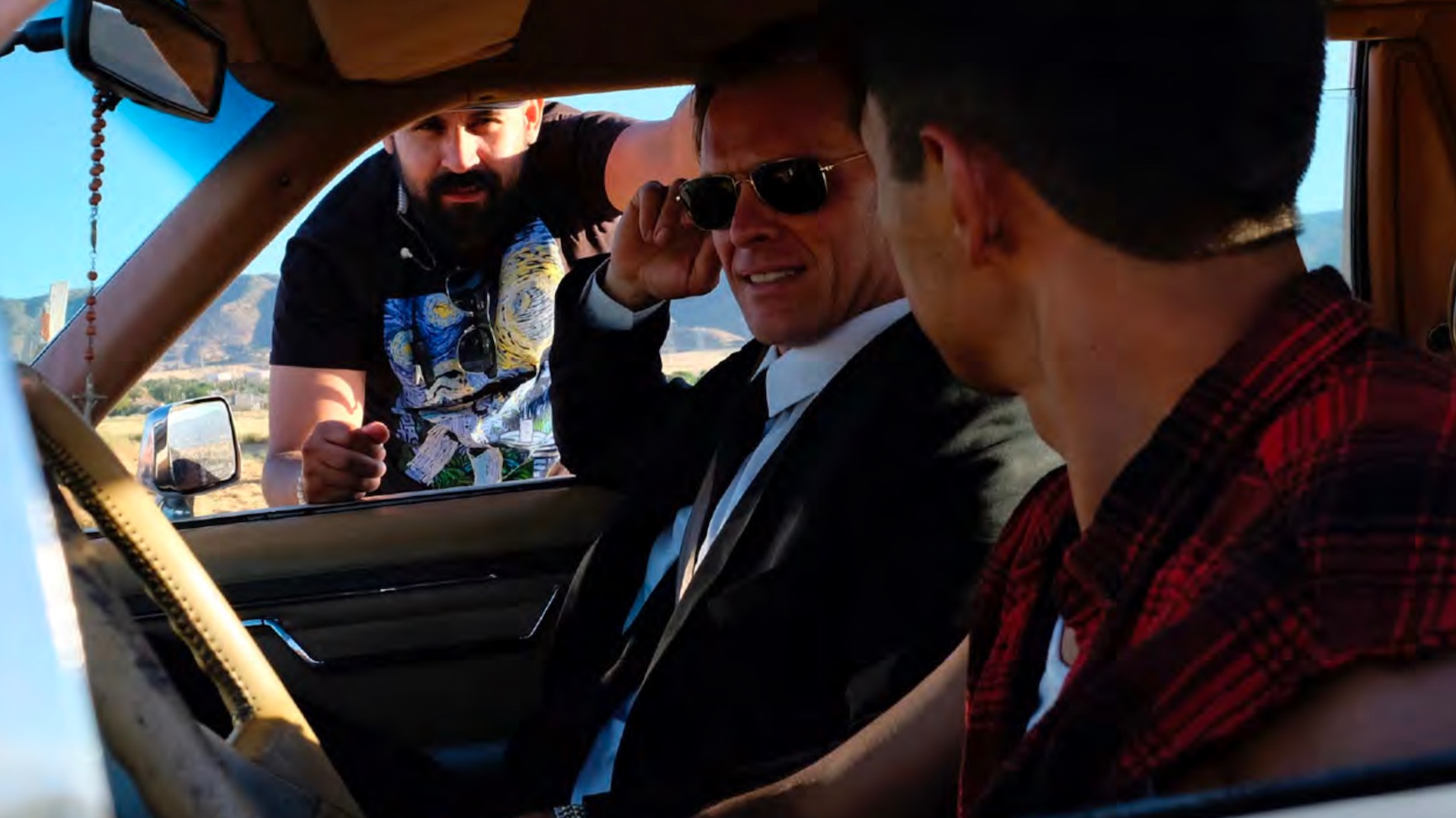
Bloodstains was actually the first short I ever wrote, way back around 2002–2003, even before I moved to California. It’s a semi-autobiographical story about a frustrated musician on the border — basically a version of me — a guy chasing a music career but feeling stuck. It takes the classic “deal with the devil” tale and twists it into a road-trip story where a mysterious stranger offers him a shot at stardom on the way to LA. All of it wrapped in a heavy Grindhouse influence, but set in modern times.
We cast amazing talent — Aaron Gaffey, Hansel Ramirez, and Fernanda Romero. We shot it on a modest budget, but it became the true start of my filmmaking journey. And it paid off: the film hit more than 40 festivals and earned around a dozen awards and nominations.
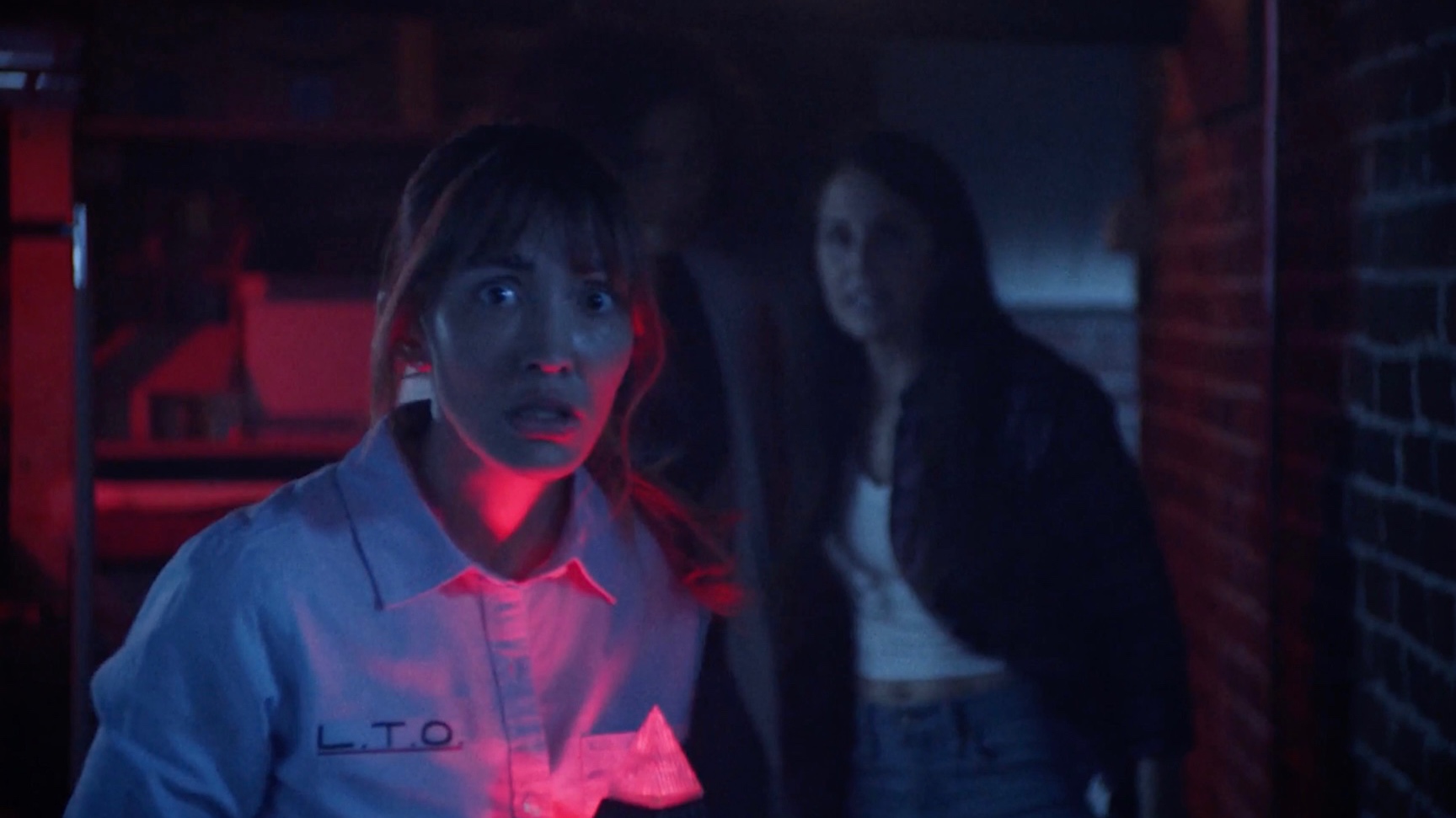
L.U.N.A. came directly from the momentum of Bloodstains. After doing so well on the festival circuit, one of the actors I met there, Roman Arabia, approached me with a script he wrote. He loved what we did on Bloodstains and had this idea for a haunted-house-style horror story with a tech twist. This was before “haunted smart devices” became a trend, so it felt fresh.
Fernanda Romero returned as the lead, joined by Lauren DeShane and Lauren Bair. L.U.N.A. surpassed Bloodstains in the festival circuit, getting into around 45 festivals and winning another dozen awards. Creatively, it was a big step forward and really set the stage for everything that came next.
Then came Matches. A good friend of mine, actor Rudy Márquez, approached me with a crime thriller script he wrote with his brother. It was dark, intense, and tackled human trafficking in LA. He asked me to direct it, and I agreed — on the condition that I could also act in it. I’m not primarily an actor, but I wanted to go through that process to grow as a director, and Rudy guided me through it. We made the film on a shoestring budget — mostly favors and a few thousand dollars — and it turned out great. It’s not horror, and it’s not on Screamify, but it’s a meaningful part of my body of work and a valuable creative experience.
Finally, Il Colore della Notte (The Color of the Night) was born from my obsession with Giallo. Originally, I was developing a feature anthology called Frutero — the story of a street vendor attacked by a racist man, who wakes up in the hospital with the ability to see when someone is close to death. That was meant to be the wraparound story for the anthology. I had already written a version of Il Colore as one of the segments. But when that project lost funding, I didn’t want to stop. During my travels with my wife, we had been shooting little “mini Gialli” just for fun around Italy, Mexico City, and other places. I took that footage and built Il Colore della Notte around it.
The result is a very experimental, Lovecraftian take on Giallo — with me playing the serial-killer filmmaker creating cinematic murders as offerings to the cosmic entity Marbas. It’s weird, bold, and made completely in the spirit of indie Giallo. I knew it wouldn’t be for everyone, but thankfully the Screamify team understood it — and so did many genre festivals and true Giallo fans.
And that’s the thread that ties all these shorts together: each one was a leap forward, a new experiment, and a new chapter in figuring out the filmmaker I’m becoming.
Do you have any fond memories from working on any of these shorts? Any challenges you overcame?
Absolutely. I have countless fond memories from working on my shorts. Even when it’s “just a short film,” making a movie feels like going to war. There’s a bond that forms when a group of people aligns toward one goal: what ends up on screen. That collective struggle, that shared purpose — that’s something unique to filmmaking. Music can be similar, sure, but you can still make an entire album alone. You cannot make a quality film by yourself. Film is a community endeavor, and when you step onto a set, you’re basically going to war together.
In terms of actual stories, Bloodstains had plenty. We shot in Palmdale, California, in the heat of summer, and I bought the car in the film for like 500 bucks. It barely ran and kept overheating. In the gas station scene, it actually died, and we had to push it. The next day it sort of worked again, but the whole thing was a bit of a sh*tshow.
We learned a lot the hard way — especially with permitting. We booked Four Aces [Four Aces Movie Ranch], that standing desert set you’ve seen in a ton of movies, including Rob Zombie’s House of 1000 Corpses. We learned that while we could shoot inside the property lines, they wouldn’t let us drive the car up front and film it without a separate permit. We were in the middle of nowhere, our budget was tiny, so we found another stretch of highway and just did it.
It was dangerous, because shooting driving scenes without a process trailer is no joke. There’s a moment where Hansel Ramirez, who plays Laz, stops the car suddenly after Aaron Gaffey’s character, Seth, says something disturbing. I was directing from the back seat — literally lying down on the floor because we didn’t have a video village. Our DP and AC were in a van behind us, close enough to get the wireless feed from the camera. I told Hansel to “pretend” to stop violently, not actually slam the brakes. He slammed the brakes. The van swerved at the last second and missed the camera by inches. And we had rented that camera — I think it was a RED Weapon [a high-end, modular digital cinema camera]. That moment was insane. It was brutal heat; we were in the desert in September; the budget was low — but the movie came out, and I’m proud of it.
With L.U.N.A., the challenges were all pandemic-related. We were ready to shoot, then everything shut down, and the delay was rough. And Il Colore della Notte was born directly out of the frustration of losing funding for my larger project. I just decided to make something anyway, using my phone and whatever I had. That DIY spark kept me going.
There are countless moments — good, stressful, chaotic — but honestly, I’d rather live the worst day on set than the best day in a nine-to-five. Every film has given me memories, friendships, and lessons that I carry with me.
How did you learn about Screamify?
I learned about the Screamify app through the horror community on social media. For the last year and a half — maybe even two years — I’ve been a lot more intentional about engaging with the horror scene on Instagram. I already followed a ton of creators, but once I started posting my mini-Gialli and other horror-related content, I wanted to connect even more deeply with the community.
For the past two years I’ve been doing Morte de Lunedí (Monday’s Death), where every Monday I upload a death scene from a classic Giallo. About a year ago, I added Giallo Trailer Thursday, where I post a classic Giallo trailer every Thursday. Those two series really pulled me deeper into the horror world online. Through that consistency, I started following and interacting with more creators who live and breathe this genre.
One of those accounts was The Horrored Girls. I loved their posts, and one day I noticed they were publishing their podcast on the Screamify app. That was the first time I had heard about it — just a couple of months ago. So I downloaded the app, subscribed, and started exploring. Right away, I noticed the focus was on independent horror, and that immediately grabbed me.
Not long after, I reached out to Sean to ask if Screamify would be interested in having my short films on the platform. He responded immediately and was incredibly nice and open to watching my work to see if it fit the platform. Since then, I’ve watched the app grow, found some really cool content on there, and I love that it’s building a home specifically for independent horror.
Why are independent films so important?
Independent films are incredibly important because they make the medium what it is. They’re the lifeblood of cinema. If you look back, a huge percentage of the films we now consider the greatest of all time didn’t have big budgets, weren’t easy to get off the ground, and definitely didn’t start with studio backing. They began with an independent spirit.
That’s why Valagardo Productions carries the slogan “Indie by Blood.” I’ve always done things in an unorthodox way. I don’t like rules, and that independent, rebellious spirit has been with me my whole life.
You don’t believe in me? Fine — I’ll write my own thing. You don’t want me to direct? Fine — I’ll start my own production company and direct it myself. You don’t like my music? Fine — I’ll keep writing, publishing it on my own, and putting it into my films where people can discover it organically. Everything I do creatively comes from that same independent drive.
Independent film comes with less red tape, fewer limitations, and more room for risk. Sure, I’d love to make a film with blockbuster-level resources someday, but I also know myself. I’d struggle with working under a studio system with executives and suits telling me what to cut, what to add, and how to reshape the story. I don’t compromise with my art. If a scene needs to be 15 minutes long, then the scene is going to be 15 minutes long. Indie filmmaking allows for that freedom — that purity of expression that big studio filmmaking rarely supports.
Beyond that, independent film shows audiences people, stories, actors, and artists who would never be seen otherwise. And this is strictly my opinion — not a knock on anyone. Independent filmmaking lets you tell niche, personal, culturally specific stories without needing to appeal to everyone. That’s essential.
It also opens doors for people who wouldn’t normally have a chance. Smaller budgets mean you can’t always hire the “best” names — the ones everyone assumes are the best simply because they’re in big productions. But that’s actually a gift. It forces you to discover new talent. Many great auteurs discovered their strongest collaborators through their independent work.
Independent film gives voice to the people who need to be heard — not just the ones approved by studios or mass-market expectations. And that’s why independent films matter. They’re where originality lives, where rebellion lives, and where diversity and true artistic expression thrive.
Is there anything we missed that’s important to you?
I just want to say thank you to Screamify and the entire team. It matters so much to have a platform dedicated to independent films — and especially independent horror. This genre was built on independence, experimentation, and rebellion. It’s not an accident that many filmmakers who became major auteurs started in horror. There’s a freedom here you don’t always find elsewhere, and that same freedom is a huge part of why I do what I do. That’s also why what Screamify is building is so important.
Independent horror needs spaces like this. If a film isn’t your style, that’s okay. If you don’t connect with something, that’s okay too. That’s the beauty of indie film — there’s room for everything. There’s room for every voice. And honestly, the horror community has been one of the most welcoming spaces I’ve ever been part of.
So, my message is simple: keep supporting independent horror. And if you feel even the slightest pull toward creating something, follow it. Make your own films. Write your own stories. In a time when big studios seem obsessed with squeezing old IPs dry or rehashing the same ideas over and over, the real originality — the real spark — comes from independent film. Thank you for supporting it. And please, keep supporting it.
You can best follow and support Blake on Instagram: https://www.instagram.com/blakevaz/. That’s where he shares the bulk of his creative work. “Everything I’m experimenting with visually usually shows up there first.” For other platforms, just search @BlakeVaz and don’t forget to check out BlakeVaz.com. However, if you want to experience the full spectrum of Blake’s artistry, you need to visit ValagardoProductions.com. Following Blake there means stepping into the broader creative world he’s building, not just the films and shorts, but the stories behind the horror projects, the shorts coming to Screamify, his filmmaking process, the Giallo archive, and the books that connect to his cinematic universe.
Next up for Blake is his first feature film, La Noche Lleva Espuelas. It is a labor of love that blends Blake’s love for the Golden Era of Mexican cinema — the rural dramas of Emilio “El Indio” Fernández and the iconic, poetic photography of Gabriel Figueroa — with his lifelong obsession with Giallo. It is the culmination of everything this creator has been refining in his storytelling over the years. You can also continue to expect more Giallo-focused content on Blake’s social media as well as a special single to commemorate the 25th anniversary of The Mulberry Purple.