Best Dracula Actors – The Most Memorable Versions of the Fanged Count
By Chaz Walker
With Luc Besson’s Dracula set to arrive in theaters this February and recent releases like Nosferatu, The Last Voyage of the Demeter, and Renfield keeping vampiric lore firmly in the spotlight Dracula is once again dominating horror conversations. As audiences prepare to see how Caleb Landry Jones interprets the legendary Count, it’s the perfect time to look back at the actors who have already left an indelible mark on the role.
Across decades, continents, and wildly different interpretations, these performances have helped define what Dracula means to horror fans. Seductive aristocrat, feral monster, tragic romantic, and pure embodiment of evil the Count has worn many faces. Here are some of the most memorable actors to don the cape and fangs.
Christian Camargo – Penny Dreadful (2016)
While major studios struggled to launch a shared monster universe, Penny Dreadful quietly assembled one of the most compelling gothic worlds on television. Christian Camargo’s take on Dracula arrived late in the series, disguised at first as Dr. Alexander Sweet a charming, intellectual figure who quickly ensnares Eva Green’s Vanessa Ives.
When his true identity is revealed, Camargo’s performance pivots from seductive restraint to terrifying dominance. His Dracula feels modern, intimate, and emotionally manipulative, making him one of the most unconventional yet effective versions of the character.
Duncan Regehr – The Monster Squad (1987)
Appearing in a film aimed at younger audiences, Duncan Regehr had no business being as frightening as he was and yet his Dracula terrified an entire generation. In The Monster Squad, he’s cold, ruthless, and unapologetically evil.
This is a Dracula who casually blows up a treehouse with dynamite and has no qualms about murdering children. Regehr’s commanding presence and chilling delivery make his Count one of the darkest interpretations ever put on screen, even while surrounded by classic movie monsters like Frankenstein’s Monster and the Wolf Man.
Klaus Kinski – Nosferatu the Vampyre (1979)
Werner Herzog’s reimagining of Nosferatu leaned heavily into atmosphere and dread, and Klaus Kinski’s performance reflects that philosophy perfectly. His Dracula is less a romantic figure and more a walking disease quiet, predatory, and deeply unsettling.
Rather than seducing victims, this Count feeds in silence, lurking like a parasite. Kinski’s exaggerated features and animalistic mannerisms strip away almost all traces of humanity, resulting in a haunting portrayal that feels closer to folklore than fantasy.
Jack Palance – Dracula (1974)
Jack Palance brought a surprising sense of melancholy to Dracula in this television adaptation produced by Dan Curtis and written by Richard Matheson. His Count is driven by longing and grief, haunted by the memory of a lost love.
This interpretation emphasizes tragedy over terror, presenting Dracula as a figure torn between his monstrous nature and the remnants of his humanity. Palance’s physical intensity gives the role weight, while his emotional vulnerability adds depth rarely seen in earlier versions.
Willem Dafoe – Shadow of the Vampire (2000)
In this fictionalized account of the making of Nosferatu, Willem Dafoe plays Max Schreck as if he truly is a vampire. The result is one of the most fascinating meta-performances in horror cinema.
Dafoe disappears into the role, blurring the line between actor and monster. His unsettling interactions with the cast and the growing realization that people around him are dying turn the film into a darkly comic nightmare. While technically a variation on Dracula rather than a direct adaptation, it remains one of the most unforgettable portrayals associated with the character.
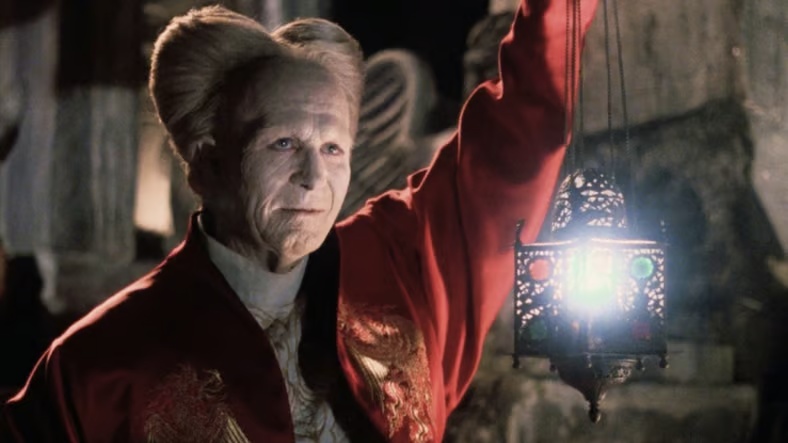
Gary Oldman – Bram Stoker’s Dracula (1992)
Francis Ford Coppola’s lavish adaptation gave Gary Oldman room to explore multiple facets of Dracula, from ancient warlord to tragic romantic to seductive predator. Through elaborate makeup and visual effects, Oldman’s Count visibly evolves throughout the film as he feeds and regains his strength.
Oldman balances vulnerability and menace with ease, making this version both deeply romantic and genuinely dangerous. It’s one of the most visually iconic and emotionally layered performances the character has ever received.
Carlos Villarias – Dracula (Spanish Version, 1931)
Shot simultaneously with the English-language Dracula, the Spanish version benefits from looser censorship and more expressive performances. Carlos Villarias brings greater physicality and emotion to the role compared to his English-language counterpart.
His Dracula moves more freely, expresses himself more vividly, and inhabits a film that many fans argue surpasses the original in atmosphere and direction. Villarias’ performance remains an underappreciated gem in vampire cinema history.
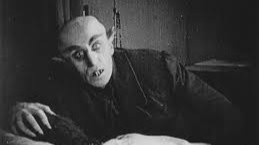
Max Schreck – Nosferatu (1922)
Few horror images are as instantly recognizable as Max Schreck’s Count Orlok. With elongated fingers, sunken eyes, and a corpse-like gait, Schreck created one of cinema’s earliest and creepiest monsters.
Though legally forced to disguise Dracula under another name, Nosferatu’s influence is immeasurable. The use of shadow, movement, and expression turned Orlok into a symbol of pure dread—one that continues to haunt horror imagery over a century later.
Christopher Lee – Horror of Dracula (1958)
Christopher Lee redefined Dracula for the modern age through Hammer Films. His Count is regal, imposing, and seductive until the bloodlust takes over. When it does, Lee transforms into something feral and terrifying, fangs bared and eyes burning with rage.
Lee portrayed Dracula across ten films, making him one of the most prolific actors to inhabit the role. His physical stature and intensity helped cement Dracula as both a romantic icon and a true monster.
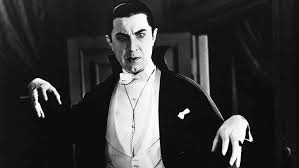
Bela Lugosi – Dracula (1931)
There is Dracula and then there is Bela Lugosi. His performance remains the gold standard against which all others are measured. Lugosi’s hypnotic gaze, deliberate movements, and unmistakable accent defined the character for generations.
Even when appearing in lighter fare like the Abbott and Costello films, Lugosi’s presence carried an undeniable chill. Lines like “Listen to them, the children of the night” have become immortal, ensuring his place as the definitive Dracula in the public imagination.
Who is your favorite on-screen Dracula? Would you add Frank Langella, Gerard Butler, John Carradine, Richard Roxburgh, George Hamilton, or even animated versions to the list?
Stream More Horror on Screamify
Visit www.screamify.com for nonstop horror entertainment.
Screamify features over 300 horror movies, from classic Universal monsters to modern cult favorites. We’re also producing original horror films, with micro horror content launching in 2026.
Subscribe for just $2.99 a month with a free 30 day trial and sink your teeth into horror history.