Clocking In for Terror: 5 Horror Movies That Make Work Deadly
There's something uniquely terrifying about horror that happens at work. You're already stressed, already cornered by social contracts and professional obligations—and then the nightmare begins. These five films turn the everyday workplace into a hunting ground, using the logic of employment, hierarchy, and confinement to amplify the dread to unbearable levels.
5. Pontypool (2008)
In the basement of a small-town Ontario church, radio host Grant Mazzy (Stephen McHattie) settles in for another quiet morning broadcast when reports of violence start flooding in from across the town of Pontypool. Director Bruce McDonald's low-budget Canadian masterpiece traps its characters in their workplace—a local radio station—as the only link between a panicking public and an unfolding catastrophe.
The twist: the virus spreading through town isn't airborne or blood-borne. It's linguistic. Certain words in the English language become infected, turning speakers into violent, zombie-like creatures. For a radio host whose entire job is to talk, this is a nightmare tailored to the specific horror of professional function. Mazzy's workplace becomes his only fortress—and his broadcasts, his only weapon.
Based on Tony Burgess's 1995 novel Pontypool Changes Everything, this criminally underseen film uses its radio station setting to maximum psychological effect. Few horror films in recent memory have weaponized the concept of employment so cleverly.
4. My Bloody Valentine (1981)
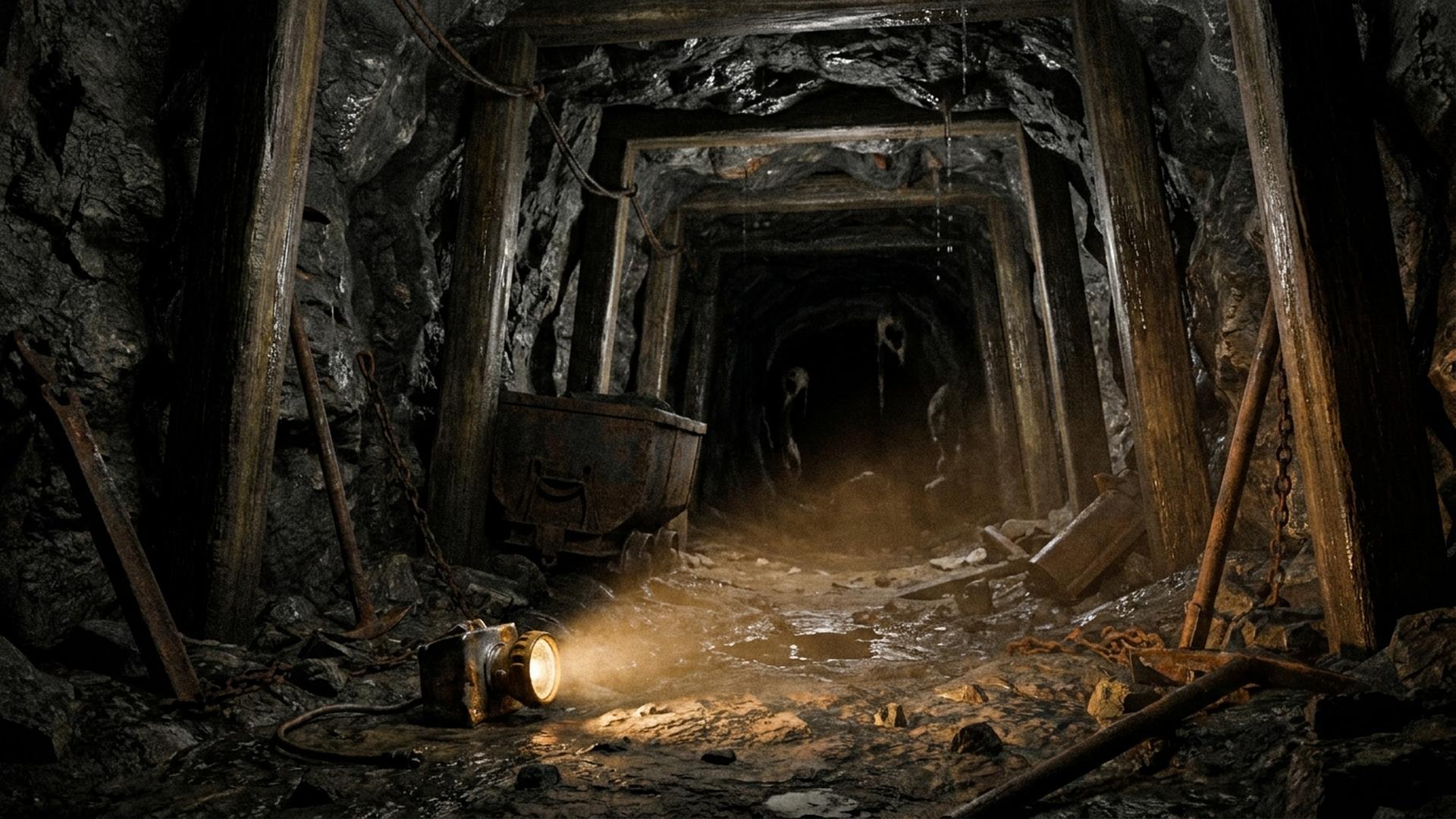
Long before slashers moved to summer camps and suburbia, My Bloody Valentine planted its flag underground in a coal mine. In the fictional town of Valentine Bluffs, a mining disaster claimed several workers when their supervisors abandoned their posts to attend a Valentine's Day dance. Twenty years later, a masked killer in full mining gear returns to punish anyone who dares celebrate the holiday again.
Directed by George Mihalka and filmed on location at the real Princess Colliery mine in Sydney Mines, Nova Scotia, the film achieves something rare: authentic workplace atmosphere. The mine is not a backdrop—it's a character. Claustrophobic shafts, industrial darkness, and the very tools of the miners' trade become instruments of murder. The film's moral engine runs on workplace negligence, and every horror that follows is a direct consequence of supervisors who chose a party over their responsibilities.
Heavily censored on its original release by Paramount, My Bloody Valentine has since been recognized as one of the finest Canadian slashers ever made. The workplace setting isn't incidental—it's the point.
3. The Belko Experiment (2016)
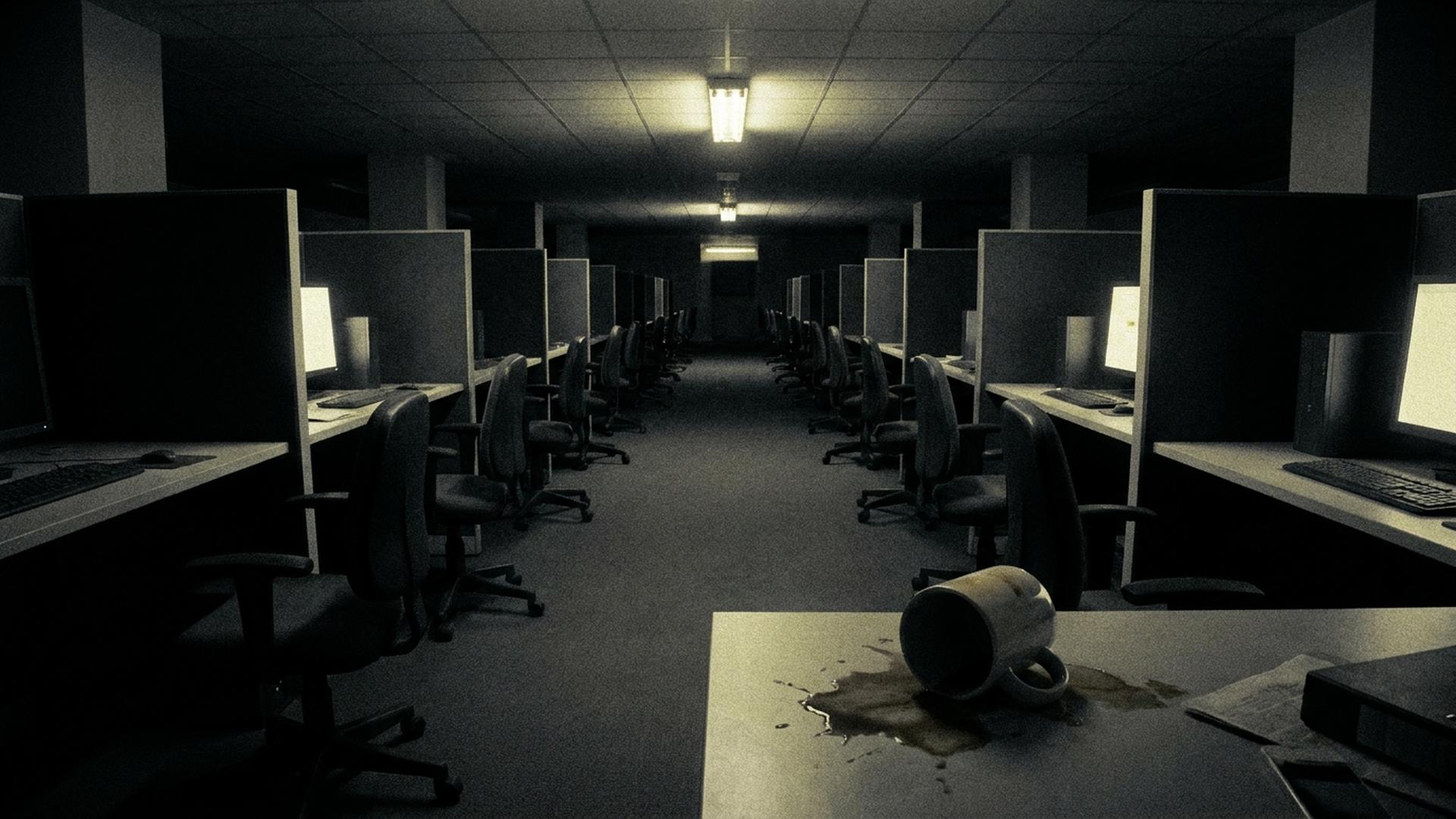
Written by James Gunn and directed by Greg McLean, The Belko Experiment is the most literal interpretation of workplace horror imaginable. Eighty American employees arrive for another ordinary Monday at the Bogotá, Colombia offices of Belko Industries when the building goes into lockdown. A disembodied voice commands them to kill two of their own. Failure means more deaths—from explosive devices already implanted in employees' skulls.
What follows is a savage examination of corporate hierarchy under existential pressure. Who survives when the org chart becomes a kill list? The office—its cubicles, conference rooms, and executive suites—transforms into a battlefield. The film strips away every professional pretense, exposing the ruthlessness that power dynamics often conceal behind HR policies and performance reviews.
Brutal, sharp, and darkly funny, The Belko Experiment premiered at the Toronto International Film Festival and remains one of the most incisive workplace horror films of the modern era.
2. The Thing (1982)
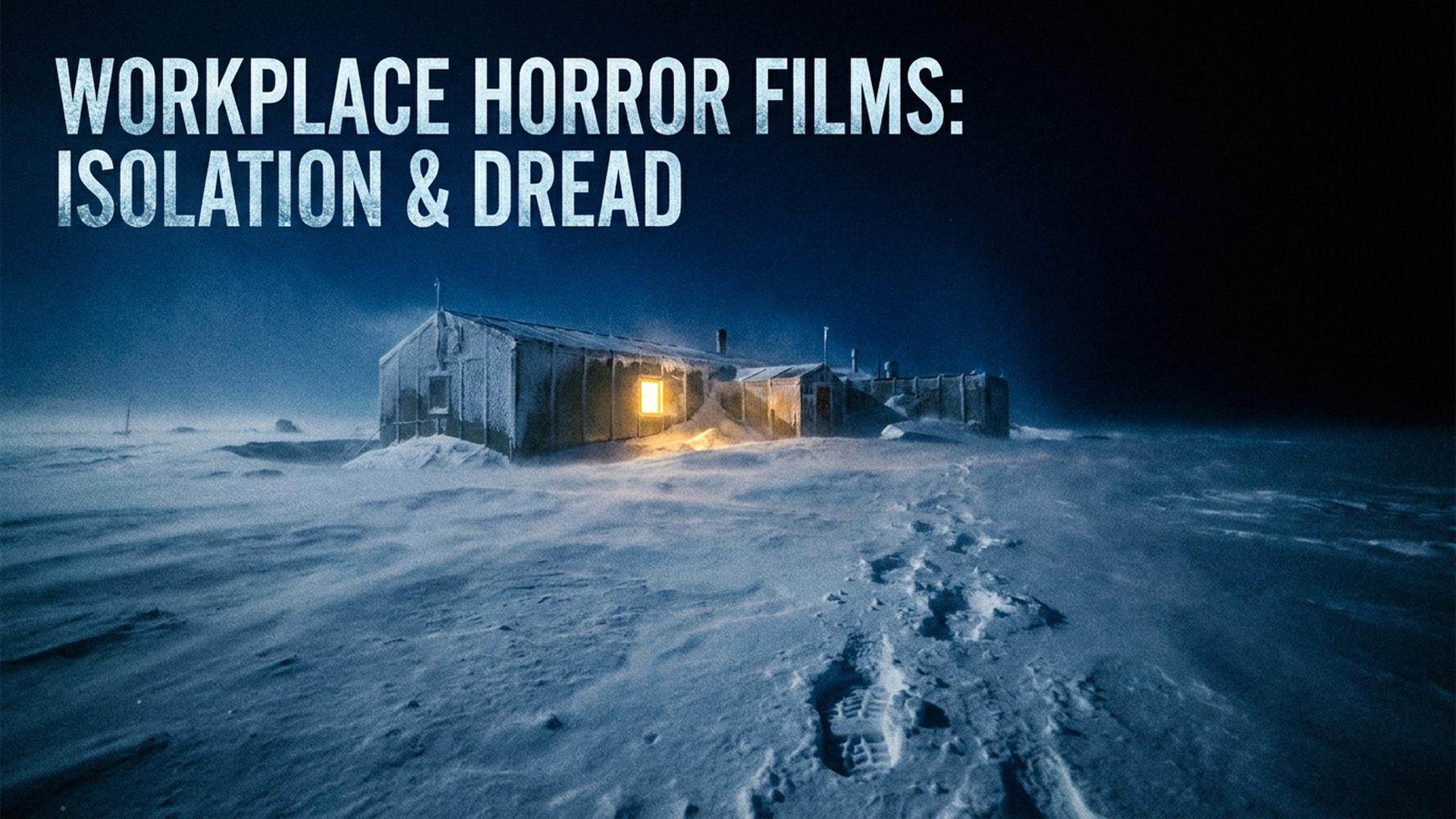
John Carpenter's masterpiece of paranoia horror is set at U.S. Outpost #31, an American research station in the frozen heart of Antarctica. The men stationed there are employed to conduct scientific research—a professional mission that becomes irrelevant when a shape-shifting extraterrestrial organism begins assimilating and perfectly imitating members of the crew.
The workplace dynamics of The Thing are essential to its terror. These men didn't choose each other—they were assigned to work together in one of Earth's most isolated environments. Chain of command collapses. Quarantine protocols fail. The very interdependence that makes a research station function becomes the alien's greatest weapon. When anyone could be the Thing, the office becomes the most dangerous room imaginable.
Released in 1982 to mixed reviews, The Thing is now rightfully regarded as one of the greatest horror films ever made. Rob Bottin's practical creature effects remain unmatched decades later, and Carpenter's paranoid atmosphere has influenced virtually every horror film that followed it.
1. The Shining (1980)
Stanley Kubrick's adaptation of Stephen King's novel remains the definitive workplace horror film. Jack Torrance (Jack Nicholson) accepts a job as winter caretaker of the Overlook Hotel—a sprawling, isolated luxury resort in the Colorado Rockies that closes for the winter season. It's steady work. It's also, as we quickly learn, a gateway to madness.
The Shining works as workplace horror because everything terrible about it flows directly from Jack's employment. The job requires him to be there. The job requires him to maintain the building. The job isolates him from the outside world. And when the hotel's supernatural residents begin working on his psychology—offering him the very tools of his caretaker role as weapons—the distinction between Jack Torrance the employee and Jack Torrance the monster dissolves completely.
His famous breakdown isn't just personal failure. It's a hostile takeover.
Distributed by Warner Bros. in 1980, The Shining has grown into one of the most analyzed films in cinema history. Kubrick transforms King's haunted hotel into something more unsettling than a ghost story: a workplace where the job itself is the horror.
Stream More Horror on Screamify
Visit www.screamify.com for nonstop horror entertainment.
Screamify features over 300 horror movies, from found footage classics to modern genre favorites. We are also producing original horror films, with micro horror content launching in 2026.