The Internet Horror Gold Rush: How Backrooms Cracked the Code
Something historic happened this past Memorial Day weekend. A 19-year-old YouTuber walked into a multiplex and shattered every record A24 had ever set. Backrooms, Kane Parsons' feature directorial debut, pulled in one of the biggest opening weekends in the studio's history and has since ballooned to $394.1 million worldwide. It is now A24's highest-grossing film of all time. The fifth-highest-grossing independent film ever made.
Hollywood is taking notes. Hard.
From 4Chan Creepypasta to Cultural Phenomenon
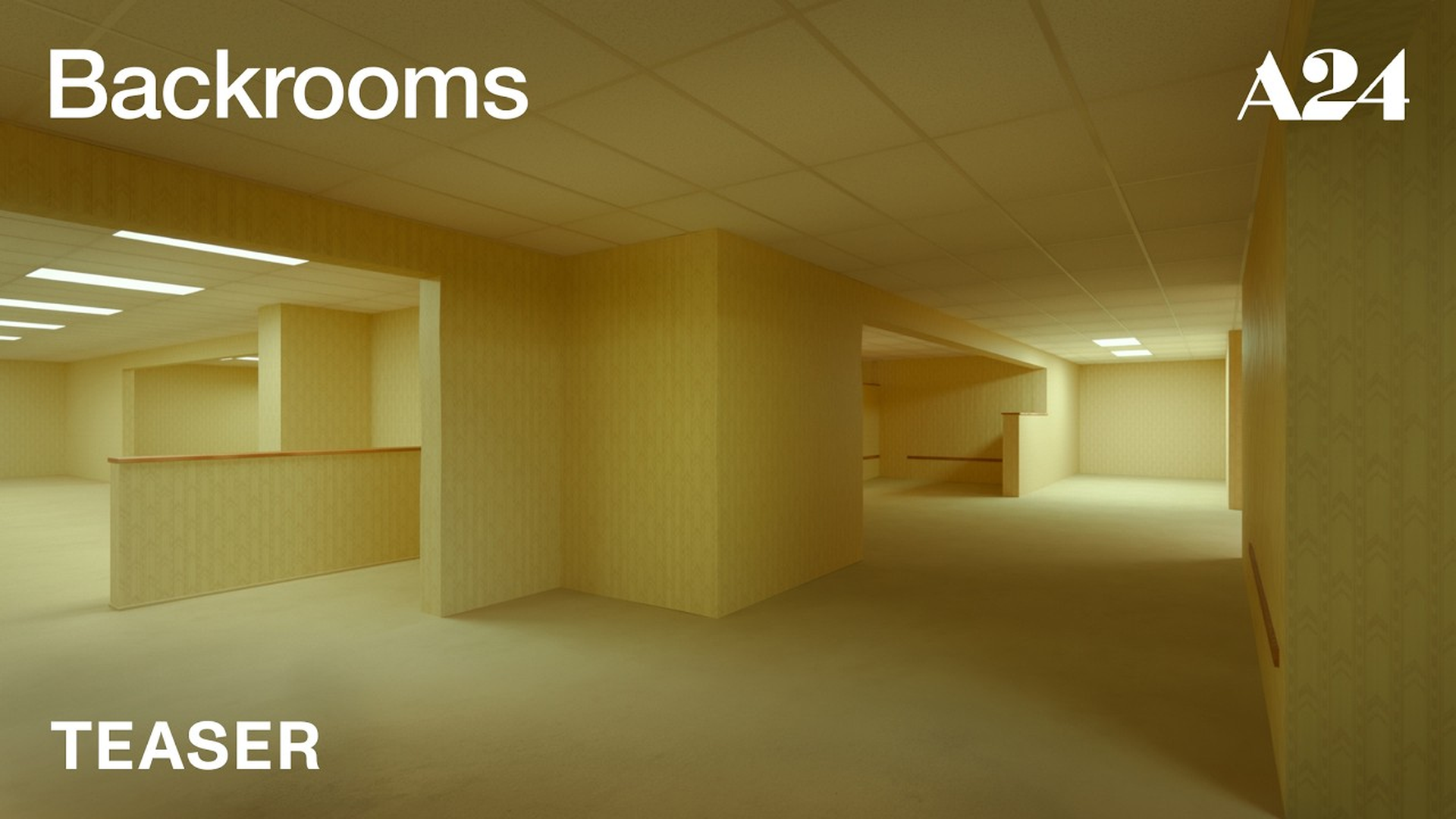
For those who haven't spent time in the darker corners of the internet (first of all, welcome), the Backrooms started as a single image posted to 4chan in 2019. It showed a mundane yellow room: fluorescent lights, beige carpet, the kind of sensory-deprivation aesthetic you'd find in a dead mall at 2am. The accompanying text said if you "noclipped out of reality," you might find yourself here. In a place with no exits, no people, and something unseen that hunts.
That single image spawned thousands of fan stories, elaborate wikis, and eventually Kane Parsons. In January 2022, then a teenager, Parsons uploaded a short film to his YouTube channel that captured the Backrooms with almost uncomfortable authenticity: the hum of fluorescent lights, the endlessness, the dread of something just off camera. The internet lost its mind. Millions of views. Studio calls flooded in.
A24 won.
What Makes Backrooms Work as a Film
The smartest thing Parsons did, working alongside screenwriter Will Soodik, was resist the temptation to over-explain. The Backrooms is frightening precisely because it has no mythology, no rules, no reason. Translating that into a feature-length narrative could have been disastrous. Instead, the film anchors its horror in something deeply human: Clark (Chiwetel Ejiofor), a failed architect drowning in alcoholism and a collapsed marriage, stumbles into the Backrooms from his furniture store's basement. His therapist Mary (Renate Reinsve), skeptical and haunted by her own losses, eventually follows.
The liminal horror becomes a mirror for grief, displacement, and the particular terror of spaces that feel like they should mean something but don't. Critics responded enthusiastically. Audiences responded with their wallets.
It also helped that Parsons made Ejiofor and Reinsve, two of the most compelling performers working today, do genuinely terrifying things in genuinely terrifying places. This wasn't a ghost-cam horror film. It was psychological horror with a studio budget and a filmmaker who understood exactly what made the source material tick.
The Gold Rush Begins
The numbers don't lie, and Hollywood's response has been swift.
On August 11, just over two months after Backrooms' release, The Wrap reported exclusively that TikTok creator Savanah Moss and creator-led studio Tongal are developing a feature film based on Jeff the Killer — one of the oldest and most recognizable creepypasta characters on the internet. The pale-faced, Glasgow-grin killer has been a fixture of internet horror since 2008, and now he's getting the full Hollywood treatment.
He's not alone. Industry watchers are already pointing to a pipeline of internet-born horror properties that studios are quietly acquiring. The SCP Foundation, a collaborative fiction project describing anomalous objects and entities that has attracted millions of devoted readers, has been in various stages of development for years. The success of Backrooms has almost certainly accelerated those conversations.
Why This Matters for Horror
The interesting thing isn't just that Backrooms succeeded. It's how it succeeded.
Parsons brought an audience with him. His YouTube subscriber base didn't just watch the trailer — they showed up opening weekend, dragged their friends, and posted about it obsessively. That's a distribution model Hollywood has been trying to crack for years. The creator-economy film isn't a novelty anymore. It's a playbook.
What makes internet horror uniquely suited to this moment is that its audience already speaks its language. Creepypastas, liminal spaces, analog horror, ARGs — these aren't niche interests anymore. They're the genre vocabulary of a generation that grew up on Reddit threads and YouTube deep dives instead of drive-in theaters. When Parsons framed the Backrooms through found footage and analog aesthetics, he wasn't being arty. He was being fluent.
The studios that figure out how to work with creator-origin horror, rather than sanding off everything that made it resonate in the first place, are going to win the next decade of genre film.
What's Coming
Jeff the Killer is just the beginning. If Backrooms taught the industry anything, it's that internet horror has a built-in audience, a built-in aesthetic, and, when handled by people who actually love the material, the potential to break through in ways that manufactured franchise horror simply can't.
For horror fans, this is a genuinely exciting moment. The stuff that used to live in text files and Wikia pages is going to start appearing on actual screens. Some of it will be terrible. Some of it will be Backrooms.
We can live with those odds.
Stream More Horror on Screamify
Visit www.screamify.com for nonstop horror entertainment.
Screamify features over 300 horror movies, from found footage classics to modern genre favorites. We are also producing original horror films, with micro horror content launching in 2026.